
Stronger Horses, Fewer Injuries: The Power of Core Training
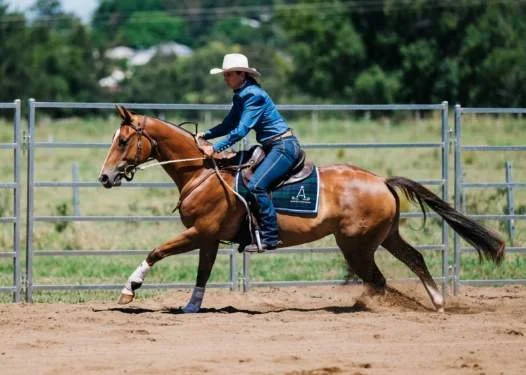
A recent study by Australian veterinarians from the Tamworth Equine Veterinary Centre and the School of Veterinary Science in Wagga Wagga has been published in the Equine Veterinary Journal, a highly respected peer-reviewed publication.
The study analysed over 6300 horses, including 260 campdraft horses assessed for lameness between 2017 and 2024. Lameness was most common in the foreleg (54%) compared to the hindleg (45%), although in cutting horses, 63% occurred in the hindleg. Across all disciplines, most injuries occurred below the knee and hock.
There is a strong link between lameness and back problems, with back pain affecting at least 35% of ridden horses and contributing to poor performance. Causes may include spinal issues, muscle soreness, incorrect training, rider skill, poor saddle fit and overuse injuries.
Core strength training is often underused but should be included throughout a horse’s career to support a healthy back and aid recovery. While horses cannot train with weights, research shows simple, effective exercises can be done at home to strengthen core muscles.
Meet the muscles
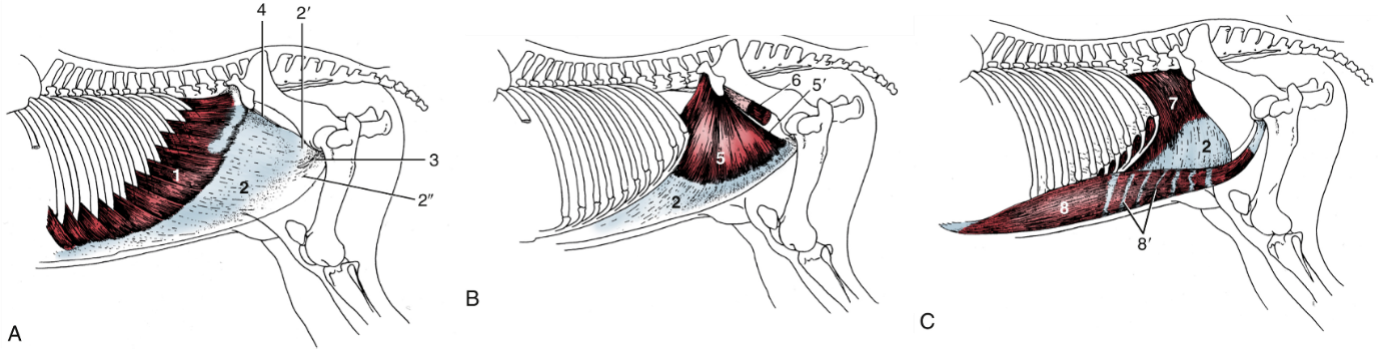
The abdominal muscles: 1 - 4 External abdominal oblique; 5,6 internal abdominal oblique; 7 transversus abdominis; 8 rectus abdominis
Deep beneath the surface muscles lie the core muscles, which support and stabilise the spine, enable movement and maintain posture. These include the large longissimus, running from the withers to the sacrum, and the multifidus, which supports and stabilises individual vertebrae while preventing overload of the longissimus.
Working together, these deep muscles control spinal movement, allowing extension, lateral flexion and rotation, while transferring power from the hindquarters through the body. Strong, well-functioning core muscles are essential for performance, injury prevention and overall soundness.
Running along the belly is the rectus abdominis (RA), a key muscle responsible for rounding the back and stabilising the spine. Strengthening the RA improves back flexion and hind limb engagement, helping reduce back pain and support long-term soundness in working horses.
Core training
Two key exercise types for improving core strength in horses are Dynamic Mobilisation Exercises (DME) and Myotactic Reflex Exercises (MRE). Good posture in horses involves rounding the back and lifting through the withers, and DMEs specifically target postural muscles to support balance and self-carriage. Unlike passive stretches, they require active muscle engagement, helping to strengthen the core through controlled movement.
MREs, such as belly and pelvic lifts, stimulate muscle activation through targeted pressure, encouraging spinal flexion and improving stability. Belly lifts flex the thoracic region, while pelvic lifts enhance flexion of the lumbar and lumbosacral joints, supporting stronger, more balanced movement.
These exercises contribute to increased muscle mass and strength, particularly in key stabilising muscles like the multifidus and rectus abdominis, helping improve spinal function and reduce strain. A stronger core is especially important as the horse’s back carries both body weight and rider load, which can place stress on the spine if not properly supported.
When performing DMEs, the horse controls its range of motion, making them safer than passive stretches. Exercises should be introduced progressively, starting with chin-between fetlocks and carpi, then progressing to chin-to-chest, while working with a veterinarian as needed, particularly for horses with existing spinal conditions.
Core strength
Core strengthening exercises build on DMEs and rely on the horse’s response to targeted pressure at specific anatomical points. Each position is held for a few seconds, followed by a brief rest before repeating, with 3–5 repetitions recommended several times per week.
As with DMEs, these exercises are most effective when performed before work to pre-activate the muscles that support and stabilise the spine. Well-developed abdominal, thoracic and lumbosacral muscles are associated with improved back flexion and greater lift through the withers.
Core strengthening exercises include:
Sternum, Withers, and Thoracic Lifting
Lateral Lifting at the Withers
Lumbar and Lumbosacral Lifting
Lumbar Lifting and Lateral Bending
Combined Techniques for Thoracic, Lumbar, and Lumbosacral Lifting
Balancing exercises
Backward Weight Shift
Tail Pull
Combination Exercises - backward weight shift + tail pull + hind limb destabilising exercises can be combined with lumbosacral rounding.
Gradients
Jumping
Poles
Unstable footing
Core strengthening exercises protocol
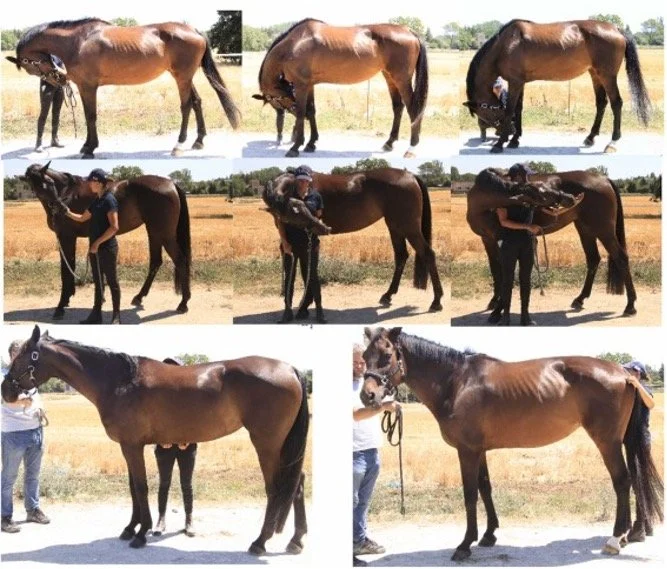
Representation of the different dynamic mobilisation exercises performed. Top row: spinal flexion exercises, from left to right: chin-to-chest, chin-to-carpus, and chin-to-fetlock. Middle row: lateral bending exercises, from left to right: chin-to-shoulder, chin-to-girth, and chin-to-hip. Bottom row: myotatic reflex exercises, from left to right: belly lift, and pelvic lift.
All exercises were performed with the horse standing square on a flat, non-slip surface.
The routine included three levels of spinal flexion (chin-to-chest, chin-to-carpus, chin-to-fetlock), three levels of lateral bending on both sides (chin-to-shoulder, chin-to-girth, chin-to-hip), and two myotatic reflex back lift exercises: thoracic and pelvic lifts.
Horses were guided using a bait, such as a carrot or molasses lick, to encourage correct positioning. Flexion exercises progressed from lower to higher reach, while lateral movements were performed on both sides, with each position held for 5 seconds and repeated 3 times per session.
Lift exercises target the abdominal and pelvic stabilising muscles. Thoracic lifts were induced by applying moderate pressure along the sternum, while pelvic lifts involved pressure between the m. biceps femoris and m. semitendinosus. Each lift was held briefly and repeated 3 times, with short rest intervals to prevent fatigue.
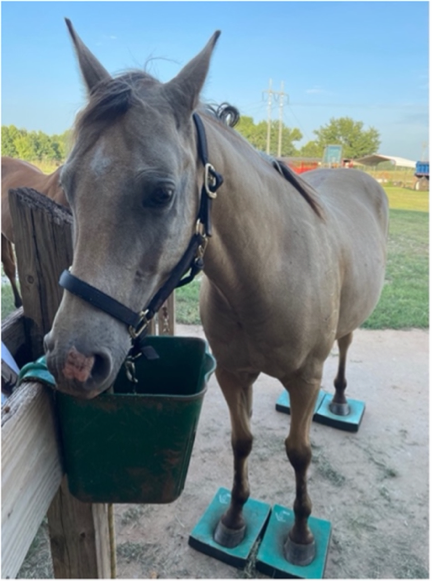
Training with unstable surfaces
Core muscle activity increases when exercises are performed on an unstable surface. Balance pads and cushions designed for horses are widely available and can help improve both stability and muscle development.
Research shows that using balance pads can enhance postural stability and increase muscle mass, particularly in the back. In one protocol, horses stood on balance pads for 5 minutes, twice daily, 5 days per week over 4 weeks, resulting in measurable improvements in balance and core strength.
Pads of varying firmness are commonly used, with many veterinarians and owners reporting positive results.
Suppling exercises
Suppling exercises enhance athletic performance by increasing joint range of motion, allowing the horse to generate force over greater distances and for longer periods—resulting in improved speed and acceleration. A greater range of motion also improves shock absorption, helping to reduce the risk of injury.
By reducing tension in muscles, tendons, ligaments and joint capsules, suppling exercises support flexibility and should form a regular part of the horse’s daily routine.
Passive suppling
Passive suppling involves slowly and carefully moving a joint to the end of its range, then holding the stretch for around 20 seconds to help lengthen ligaments, tendons and joint capsules.
Used alongside dynamic suppling, it supports long-term improvements in flexibility, particularly in the neck, shoulders and hips, while also promoting relaxation and reducing post-exercise muscle soreness.
Dynamic suppling
Dynamic suppling involves moving joints actively through their range of motion during normal movement. Common examples include schooling exercises such as turns, circles, voltes and lateral work (leg yield, shoulder-in, haunches-in and half-pass).
These movements encourage flexion, bending and rotation of the spine, improve shoulder mobility, and allow the hind legs to swing more freely through a wider range of motion. Additional exercises such as raised poles, gymnastic jumping, working on gradients and riding through shallow water can further enhance this effect.
Both dynamic and passive suppling should be included in the daily routine to promote joint mobility and reduce stiffness. While dynamic suppling forms part of regular work, passive suppling is best performed during or after exercise, when the tissues are warm, to support long-term improvements in flexibility.
Feeding for strength and soundness
Although body condition scoring is commonly used to guide nutritional advice, muscle development scoring provides valuable insight for training, nutrition and early detection of lameness. Higher muscle scores are associated with improved elevation of the forehand relative to the withers, as well as greater spinal stability.
With correct training and conditioning, important changes occur within the muscles, including increases in muscle fibre size, the number of energy-producing mitochondria, and the enzymes responsible for activating energy production. At the same time, the accumulation of waste products from muscle fuel consumption and increased oxygen delivery also rises.
To support these adaptations, the diet must provide the correct amino acids to build muscle fibres, along with appropriate minerals and antioxidants to help manage waste products. Adequate magnesium is also essential, as requirements increase with exercise, meaning the feed must consistently support the workload.
Training goals and outcomes
The five main objectives of training are to improve or maintain peak performance; prepare for competition; delay the onset of fatigue; enhance skills and work capacity; minimise the incidence of injuries or metabolic disorders; and maintain willingness and enthusiasm for exercise. Core strengthening should be incorporated as a routine component of training to support injury prevention and serve as part of rehabilitation protocols. These principles and exercises are equally applicable to riders, so remember your own core.
Muscle fitness is closely linked to muscle strength. Strength training not only improves muscular force and power, but also helps protect against injury and reduces the effects of osteoarthritis. Strengthening the muscles that support arthritic joints enhances shock absorption, improves neuromuscular activation, and may reduce repetitive impact on damaged cartilage surfaces. Core training should therefore be maintained throughout a horse’s career to support back health, as well as integrated into treatment programs when back pain is identified.
Studies such as those conducted by veterinarians at the Tamworth Equine Veterinary Centre and the School of Veterinary Science in Wagga Wagga highlight the importance of understanding common musculoskeletal injuries. This knowledge is essential for effective performance management, early detection, timely treatment, prevention of disease progression, and improving the likelihood of a full return to function.
References
B Argue and R Labens (2025). Prevalence of musculoskeletal injuries associated with lameness in Australian campdraft horses. https://beva.onlinelibrary.wiley.com/doi/abs/10.1111/evj.14551
Stubbs N. and Clayton H. (2008) Activate Your Horse’s Core. Mason: Sport Horse Publications
Dr Jennifer Stewart
BVSc BSc PhD Equine Veterinarian and Consultant Nutritionist

