

Why Low NSC & Low Sugar Matter for Your Horse
When it comes to equine health, not all feeds are created equal.
High levels of starch and sugar can trigger serious metabolic issues, especially in pregnant mares, foals, weanlings and yearlings; horses prone to laminitis; insulin resistance, or Equine Metabolic Syndrome (EMS). That’s why every Jenquine product is designed with low non-structural carbohydrates (NSC) and low sugar, helping to:
🔹 Maintain stable blood glucose and insulin levels
🔹 Reduce inflammation and metabolic stress
🔹 Prevent flare-ups of laminitis and other conditions
What Is NSC?
NSC includes sugars, starches, and fructans. Starch and sugar can spike blood glucose and insulin levels. For horses at risk, keeping starch below 4% and NSC below 10–12% is critical.
Jenquine - Low NSC, Low Sugar - Across the Entire Range
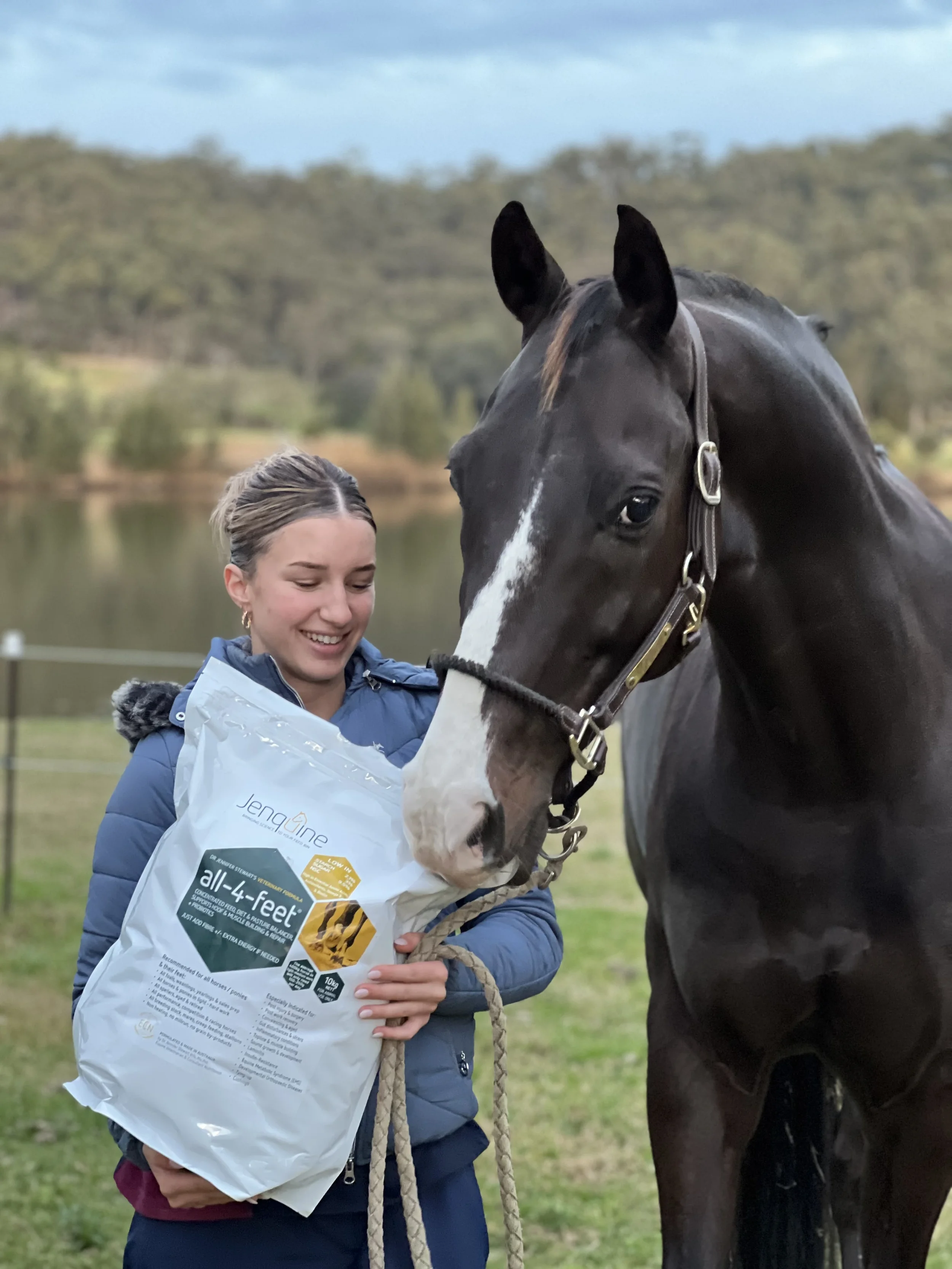
Jenquine all-4-feet® contain just 2.1% starch, 3% sugar, and a total NSC of 9.5%, well below the threshold recommended for horses at risk.
From EzyMAG+® to Bone Formula Forte®, Calsorb Forte®, and all-4-feet®, Jenquine’s range is safe for horses of all ages, breeds, and health profiles.