
A Guide to Treats: Safe Choices, Training Tips, and Enrichment Ideas
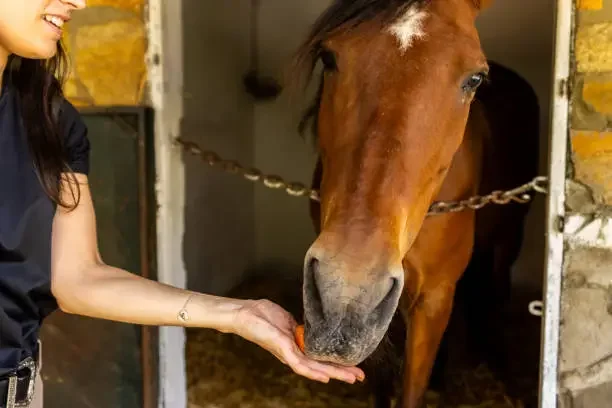
When it comes to caring for our horses, treats are more than just a tasty snack; they’re a powerful tool for training, enrichment, and building a positive relationship. But not all treats are created equal, and it’s important to know which ones are safe, how to use them effectively, and what to avoid.
Why Give Treats?
Treats can be used for:
Training and Positive Reinforcement: Rewarding good behaviour encourages horses to repeat it. Positive reinforcement, such as offering a treat after a correct response, has been shown to enhance learning, reduce stress, and strengthen the bond between the horse and its handler.
Behaviour Modification: Treats can help shape desired behaviours, especially when combined with techniques like clicker training. The timing of reinforcement is critical and should occur within half a second to 30 seconds of a response. This is particularly effective for horses that are nervous or resistant to certain tasks, such as loading onto a float.
Enrichment and Mental Stimulation: Using treats with toys, feeder balls, or other enrichment items can reduce boredom and encourage natural equine behaviours such as foraging. When using treats for mental stimulation, offer a variety of unusual flavours. These can be stuffed inside enrichment toys or scattered on an equine snuffle mat to promote exploration.
Administering Medication: Many medications are bitter and unpalatable. Hiding them in treats can make administration easier and encourage horses to accept treatment. If you’re disguising a bitter pill, choose a soft, sweet treat with a strong flavour such as molasses or peppermint.
Stretching and Exercise: Treats are often incorporated into dynamic stretching routines, such as “carrot stretches,” to enhance flexibility and core strength. Despite the name, these stretches can be performed with any treat to guide the horse through the range of motions.
Choosing The Right Treat
See Table 1 below for a list of safe and suitable treats. Whatever your reason for offering treats, it’s important to consider several key factors when choosing and feeding them.
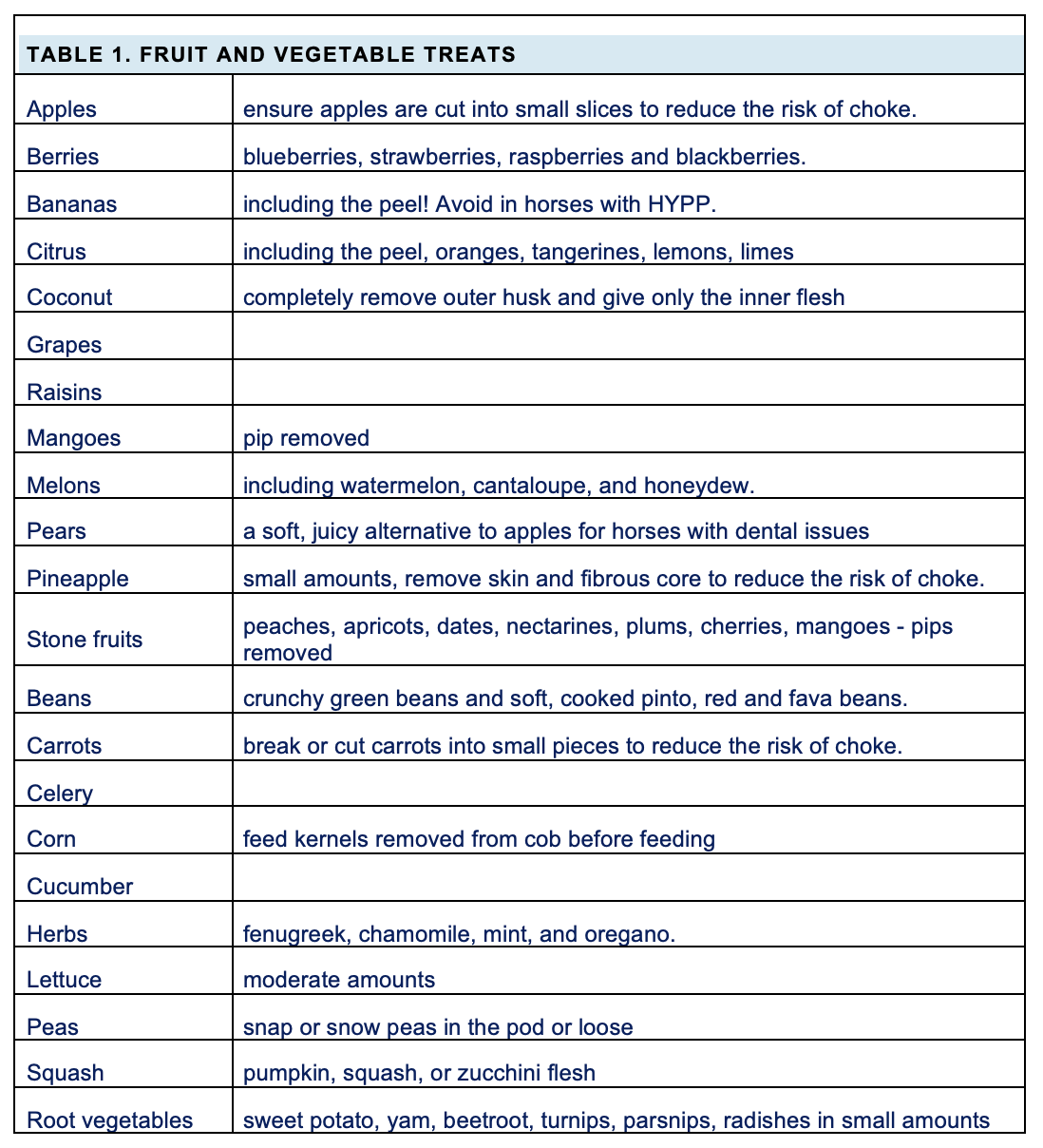
Moderation is Key: Limit treats to 1-2 per day and offer them in small, bite-sized pieces to reduce the risk of choking (about the size of your thumbnail).
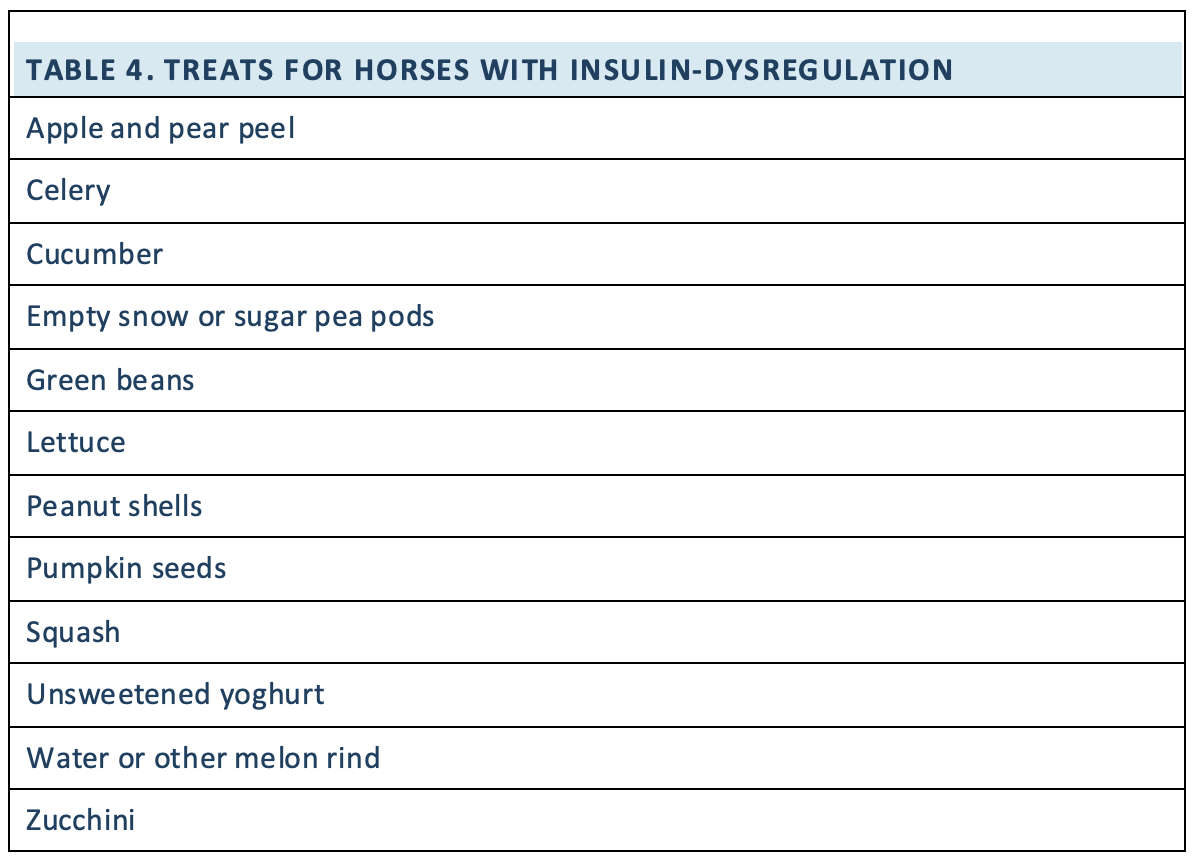
Metabolic Issues: Horses with Equine Metabolic Syndrome (EMS), insulin dysregulation, prone to laminitis, obesity, or Cushing’s disease (PPID) should avoid treats containing sugar, starch, molasses, or grains (including by-products such as millmix, bran, and pollard). Instead, choose sugar-free lollies or low-sugar homemade options (see the Flax/Linseed Cookies recipe from the Equine Cushings and Insulin Resistance Group (ECIR)). Many otherwise healthy treats become unsuitable for horses with these conditions; for example, apples and bananas are poor choices, although their peels can be a good alternative (see Table 4).
Recent studies have explored the use of artificial sweeteners. Both erythritol (approximately 70% as sweet as sugar) and stevia (around 300 times sweeter than sugar) contain no calories and, importantly, do not affect blood glucose or insulin levels.
HYPP: Horses with HYPP are very sensitive to potassium levels in their diet, and bananas, apricots, plums, pumpkin and cantaloupe are not suitable.
Dental Issues: Horses with dental conditions often cannot chew treats thoroughly, so use softer treats (watermelon or pears) to avoid choking.
Competition Horses: Some treats (like chocolate or poppy seeds) can cause positive swab results in competitions.
Work with your veterinarian or an equine veterinary nutritionist to determine which treats are safe for your horse, especially if they have a health condition.
Flavour Preferences
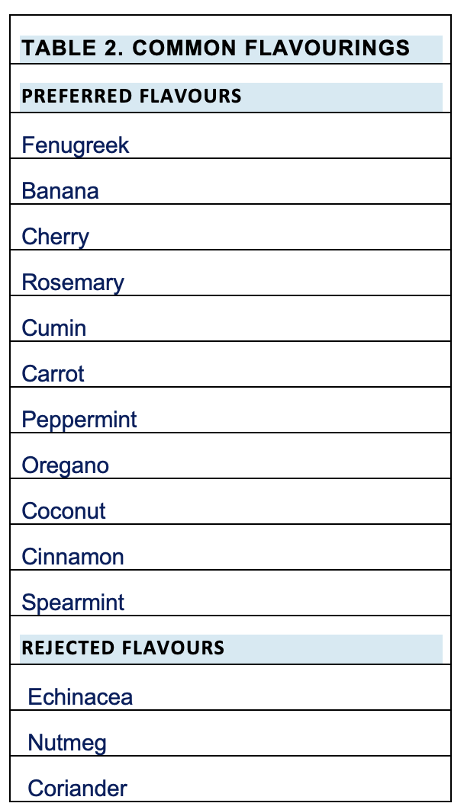
Just like humans, horses can be selective about flavours. You may need to try several types of treats to find one your horse enjoys (see Table 2). Some horses exhibit an aversion to unfamiliar feed items and may require multiple exposures before they will taste them. Even then, they might need to try a treat several times before deciding whether they like it.
Horses can detect four of the five basic taste components: sweet, sour, salty, and bitter. It is not yet known whether they can perceive ‘umami’, the savoury taste, or whether they experience an age-related decline in smell and taste sensitivity similar to that observed in humans, primates, and rodents. If such a decline occurs, enhancing the odour profile of feed offered to older horses may help compensate for reduced sensitivity, thereby improving appetite.
Unsafe Foods
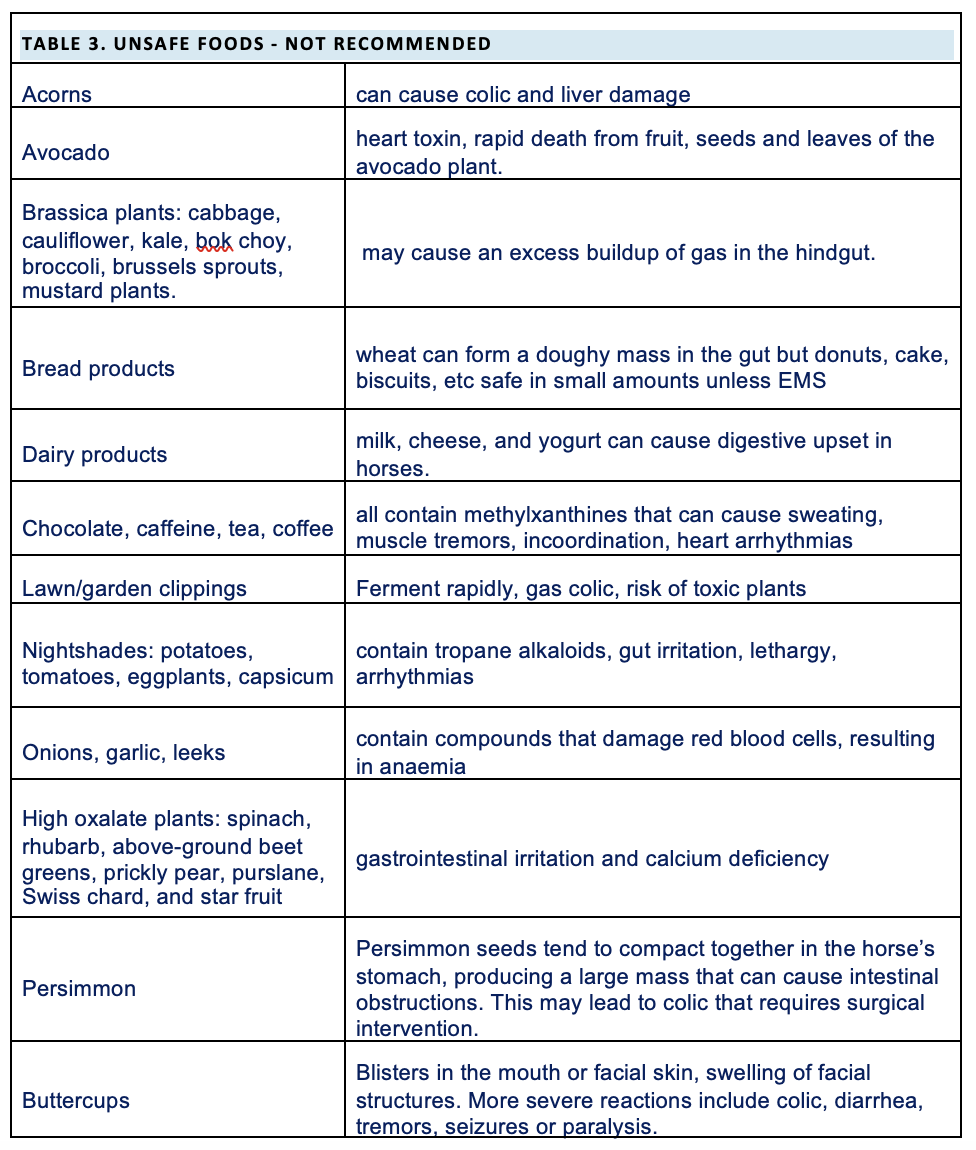
Not all human foods are suitable for horses. Feeding unsafe items as treats can lead to digestive issues, colic, or even serious toxicosis/poisoning (see Table 3).
Creative Treats
There are countless recipes for homemade horse treats using ingredients such as apples, apple sauce, apple cider vinegar, bananas (fresh or dried), brown sugar, carrots, cinnamon, canola oil, coconut oil, chia seeds, cranberries, crushed peppermints, fenugreek, flaxseeds, flour, hemp seeds or hearts, linseeds and linseed oil, mango, mint, molasses, peanut butter, pumpkin seeds, rolled or whole oats, salt, and vanilla.
For a creative twist, bake treats in ring tins so they have a hole in the middle for hanging in the stable. In hot weather, frozen treats are a refreshing option. Blend fruit and vegetables with water and freeze, or layer fruit and ice cubes in a tub before freezing. Alternating layers of ice prevents the fruit and vegetables from floating to the top, and speeds up the freezing process.
Happy baking!
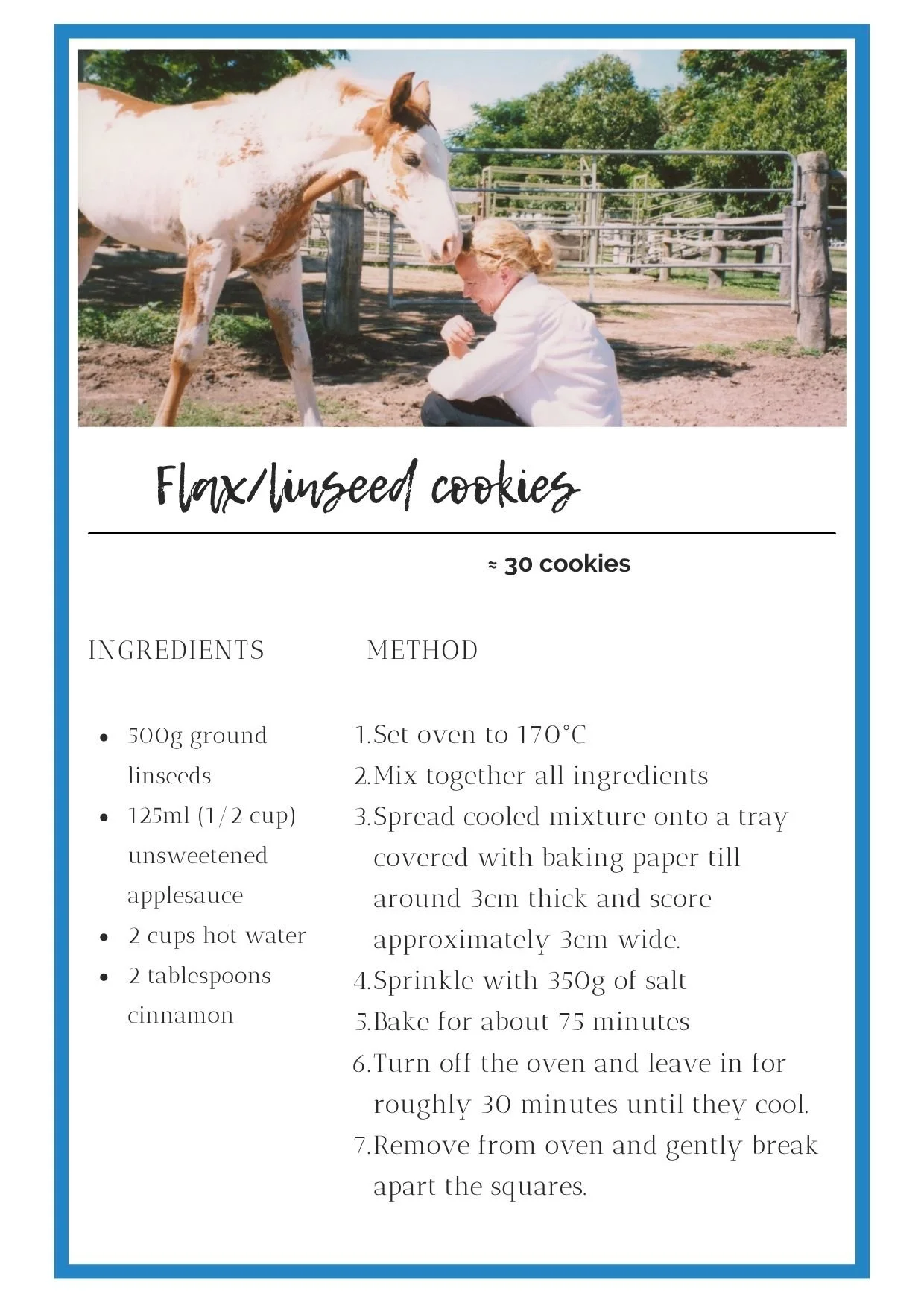
Flax/Linseed Cookies recipe from the Equine Cushings and Insulin Resistance Group (ECIR)
Final Thoughts
Treats are a wonderful way to bond with your horse, support training, and provide enrichment. Always consider your horse’s individual health needs and preferences, and consult your vet or an equine nutritionist if you’re unsure.
References
Dr Jennifer Stewart
BVSc BSc PhD Equine Veterinarian and Consultant Nutritionist

